The main points
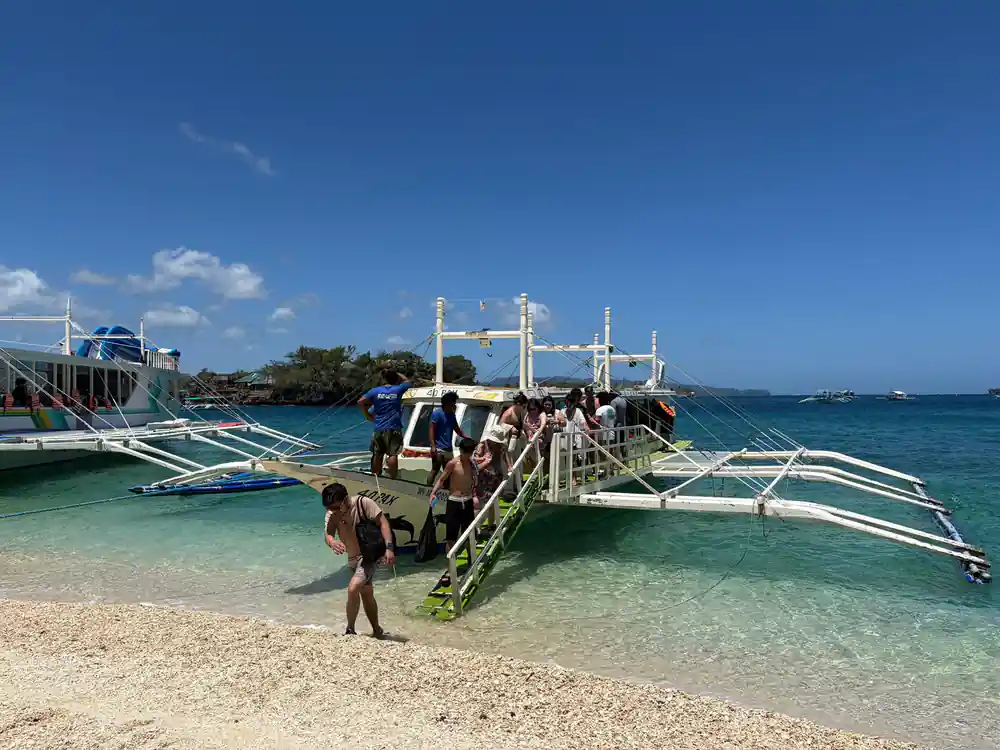
- A bangka, with bamboo arms out either side and a canopy over rows of seats, which is the Philippine boat.
- The shared boat hire included in the booking, inside a total tour length of five and a half.
- You sail with other guests on a set route, which keeps it sociable and keeps it running to time.
- The guide works in both, and an English-speaking guide is specifically on the inclusion list.
What a bangka is
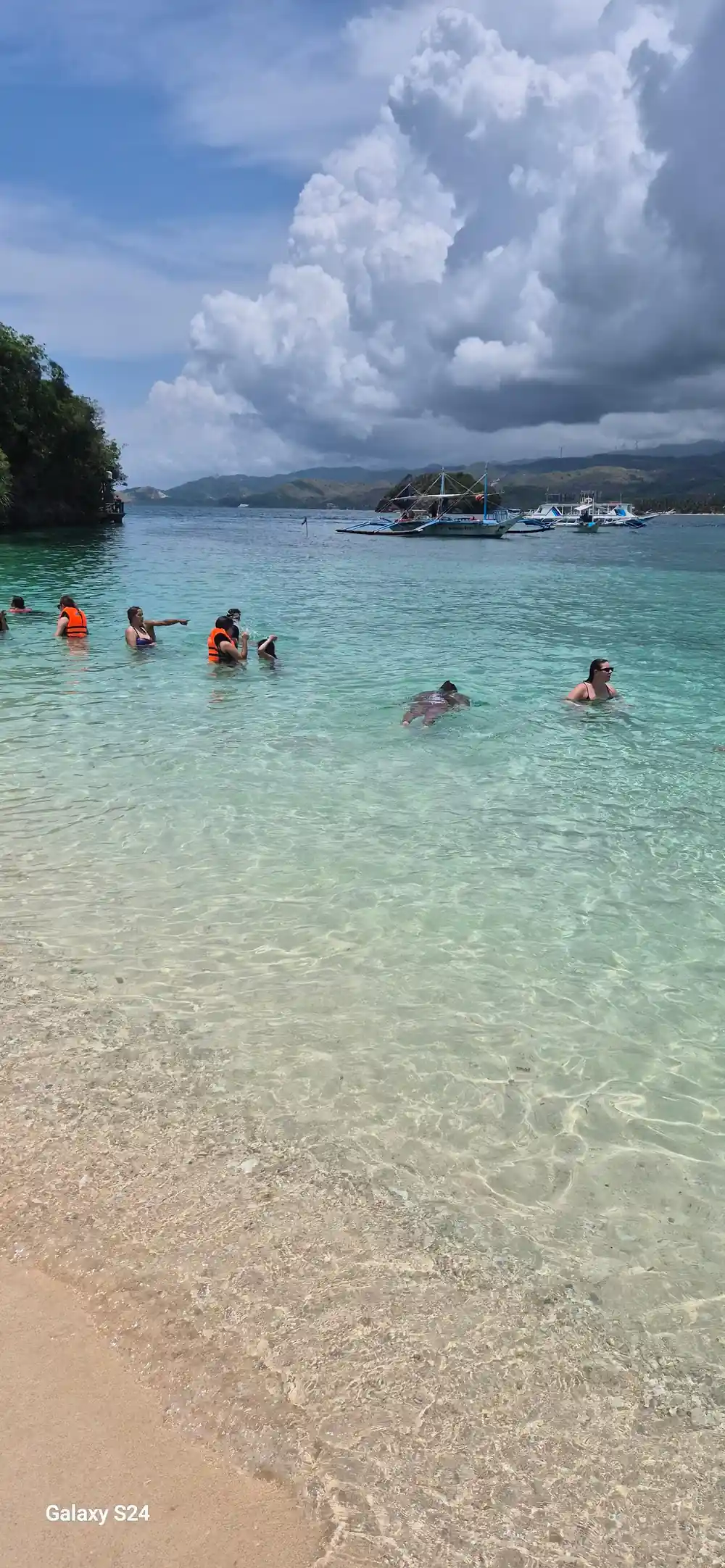
The Philippine boat. A narrow hull with two bamboo outriggers held out on either side by curved arms, and a canopy over rows of bench seats down the middle. Some are small enough for two fishermen and some carry forty tourists.
The outriggers are what make it work. A narrow hull alone would be unstable; with two floats held wide it becomes remarkably steady, which is why the design has survived unchanged for a very long time.
They are also the best place to sit when the boat is stopped. Straddling an outrigger arm with your feet in the water while the boat lies at anchor is one of the small pleasures of a day like this. You see them everywhere in the Philippines, from fishing hulls to the large passenger versions used for tours like this.
Boracay island hopping private tour, or shared
This one is shared rather than chartered. The inclusion list says shared boat rental for four and a half hours, which in practice means other guests aboard, a set route, and a schedule that is kept to.
That is the trade. A private charter lets you choose your own stops and linger where you like; a shared boat gets you a fixed itinerary with a group and a guide who runs it.
For most visitors the shared version is the better one. The route covers the stops worth making, the lunch is a group meal, and the atmosphere on the boat is a large part of what guests describe afterwards.
The crew and the guide
An English-speaking guide is on the inclusion list and the tour runs in English and Tagalog. The guide is the person who runs your day: the stops, the timings, the snorkelling spots and the safety.
The review record names them constantly. Jonah, Mark, Edgar, Patricia, Justine, Joneld: guests remember who took them out, which across a whole set of reviews is a pattern rather than a coincidence.
What guests describe is attentiveness. Making sure everyone got the most out of the day, taking photographs for people, checking that nobody was left behind at a swimming stop. That kind of thing does not show up in an itinerary and it is most of what separates a good day from an adequate one.
Boracay island hopping outfit: what to wear and bring
Seven items are named: sunglasses, a sun hat, swimwear, a change of clothes, a towel, sunscreen and water. All seven earn their place on a day this long in this climate.
Wear the swimwear under your clothes. There is no changing room on a bangka and the stops come quickly, so anybody who packed a swimsuit rather than wearing it will be doing something awkward behind a towel.
The change of clothes is the item people skip and regret. Five hours of getting in and out of the sea leaves everything damp and salty, and dry clothes for the journey back are worth the space.
Sun and water on the boat
There is a canopy, so there is shade, but the sun on the water either side of it is relentless and the wind hides the heat completely. This is more exposure than a day on a beach, not less.
Apply sunscreen before you board and again after each swim. Reef-safe formulations matter here given how much of the day is spent in shallow water over coral.
Drink more than you think you need. Water is on the bring list for a reason, and dehydration is the most common avoidable problem on an island hopping day. The reflection off the sea is the part people forget, and it catches out even careful travellers.
Life vests and safety
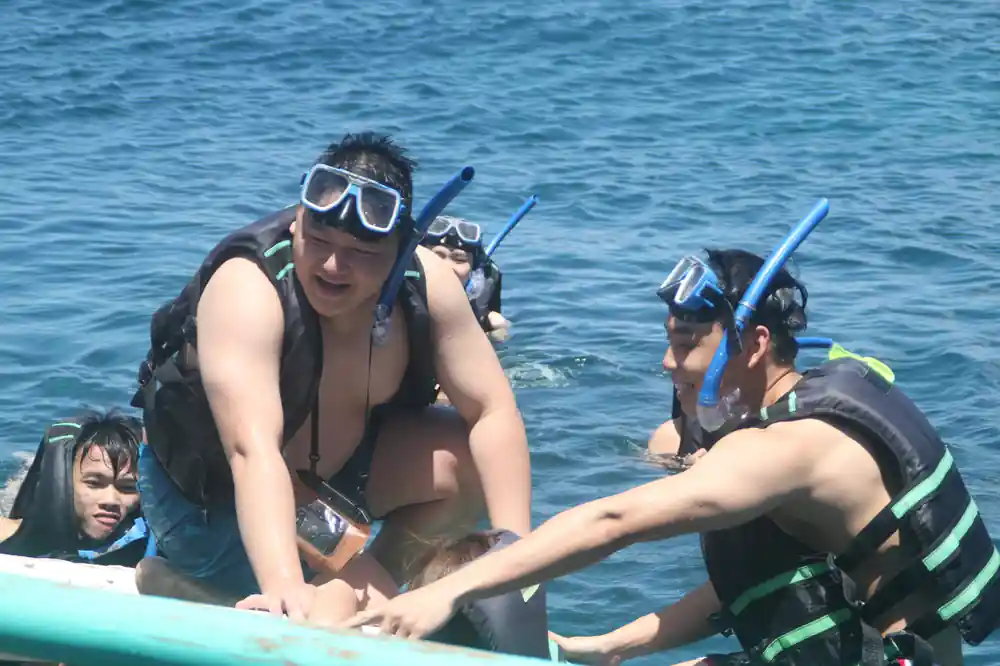
Provided, and worn. Photographs from the operator show rows of guests in orange vests under the canopy, which is standard practice on Philippine passenger boats rather than a comment on the sea.
Keeping one on in the water is entirely normal here and a fair number of people do it at every stop. Nobody thinks anything of it, and for a weaker swimmer it turns snorkelling into something relaxing.
Guests describe the crew making sure everybody felt safe and nobody was left behind. On a day with several stops and a lot of people in the water, that is the thing that actually matters.
Who should not come
The operator lists the tour as not suitable for people with pre-existing medical conditions. That is the only stated restriction, and it is broader and vaguer than most.
The reasoning is presumably the shape of the day: several hours on an open boat in tropical heat, repeated entries into open water, and stops on islands with steps and rock underfoot.
If something applies to you and you are unsure, contact the operator rather than deciding alone. A stated restriction that broad is one where the people running the boat will have a better answer than a webpage. Asking takes a moment and it removes the only genuine uncertainty in the whole booking.
Book a seat on the boat
from US$19Reserve now & pay later
Things travellers ask
What kind of boat is it?
How long is the boat hire?
Is it shared or private?
What languages does the guide speak?
Are life vests provided?
What should I bring?
Who is it not suitable for?
Day-bag checklist
- Sunglasses, sun hat and sunscreen
- Swimwear, towel and a change of clothes
- Water, and cash for the optional entrances
Facts in brief
- Boat hire4h30 shared
- VesselOutrigger bangka
- Life vestsProvided
- Not suitableMedical conditions