The main points
- The snorkelling mask comes with the tour. The tube and the fins are listed separately and are not.
- The tour describes the guide taking the group to the best snorkelling in the area rather than anchoring anywhere.
- The tour names colourful wrasses, moray eels and sea snakes among what lives around the island.
- A snorkelling fee is listed as optional on the exclusions and paid locally on the day.
Where you snorkel
Wherever the guide judges best on the day, which is how it should work. The tour describes a bilingual guide escorting the group to the best snorkelling spots in the area rather than anchoring at a fixed point.
That flexibility matters on a coast where conditions change. Wind direction, tide and visibility all shift which site is worth being at, and an operator who goes to the same place regardless is not making that judgement.
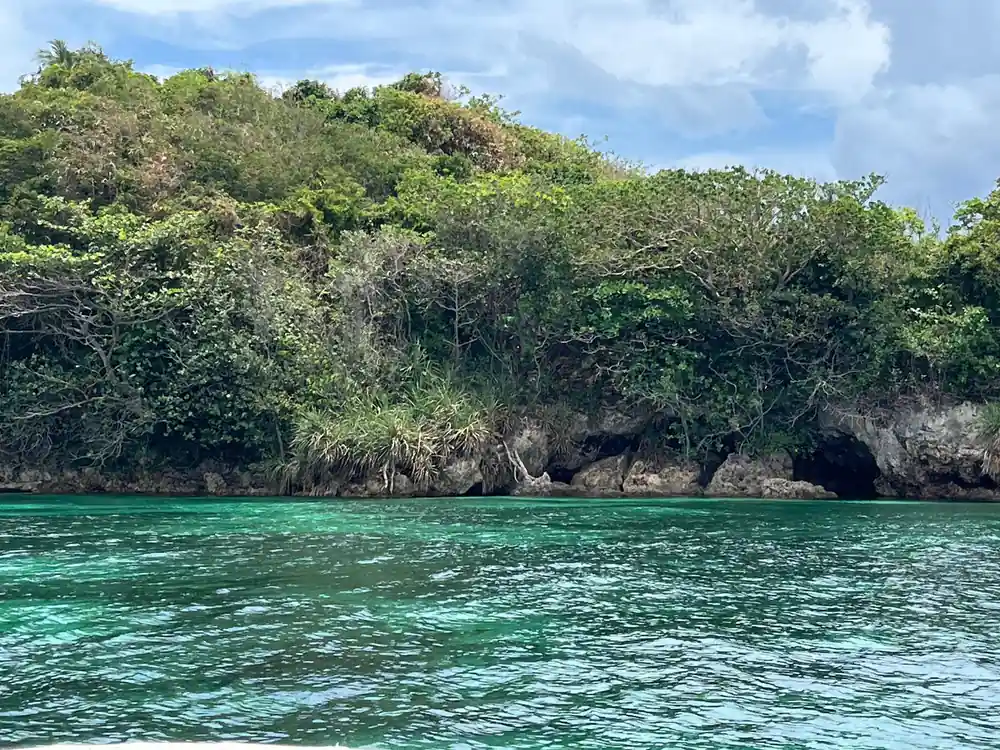
Boracay is ringed with coral, so there is more than one option. The reef is not the Great Barrier Reef and nobody should arrive expecting it, but it is a genuine tropical reef with genuine reef life on it. Visibility varies with the season and the wind, so a guide's judgement is worth more than a fixed itinerary.
Can you snorkel in Boracay: what you see
The tour names three things specifically: colourful wrasses, moray eels and sea snakes. That is an unusually specific list for a tour description and all three are worth knowing about.
Wrasses are the reef's colour. They range from small cleaner wrasses working over other fish to larger species in blues and greens, and they are almost always the first thing a snorkeller notices.
Moray eels live in holes in the rock and coral, showing only a head with an open mouth. That open mouth is breathing rather than threatening, which is worth knowing before you meet one. None of the three is aggressive and all three are best watched rather than approached.
The sea snakes
Banded sea kraits are common in Philippine waters and they are the snakes the tour is referring to. They are strikingly patterned in black and pale bands and they are genuinely venomous.
They are also almost completely uninterested in people. Sea snakes have small mouths, docile temperaments and no reason to bite a snorkeller, and bites are vanishingly rare outside of fishermen handling nets.
The rule is the same as for everything on a reef: look, do not touch, and give it room. A sea snake swimming past a group of snorkellers is a good sighting rather than a problem.
Boracay snorkeling: the gear question
This is the detail worth acting on. A snorkelling mask is on the inclusion list. Snorkel tube and fins are on the exclusion list. Those are two different things and the difference is easy to miss when booking.
A mask without a tube means holding your breath and lifting your head, which is fine for a look and tiring across a proper session. One guest raises exactly this, noting they were not given a tube with the mask.
If you snorkel with any regularity, bring your own tube and fins. They pack small, they solve the problem entirely, and a mask you know fits is better than any mask handed to you on a boat. It is the single most actionable point here and it takes five minutes to solve before you travel.
The optional fee
A snorkelling fee appears among the optional exclusions alongside the two island entrances. It is paid locally on the day in cash rather than through the booking.
That structure is standard in the Philippines, where marine areas and individual sites often levy their own charges. It is stated openly in the exclusions rather than emerging at the boat.
Bring local currency for the day. Between this and the two island entrances, cash is the thing most likely to be missing from an otherwise well-prepared bag. Small notes are more useful than large ones on an island where change is not always available.
Do you need to be a strong swimmer
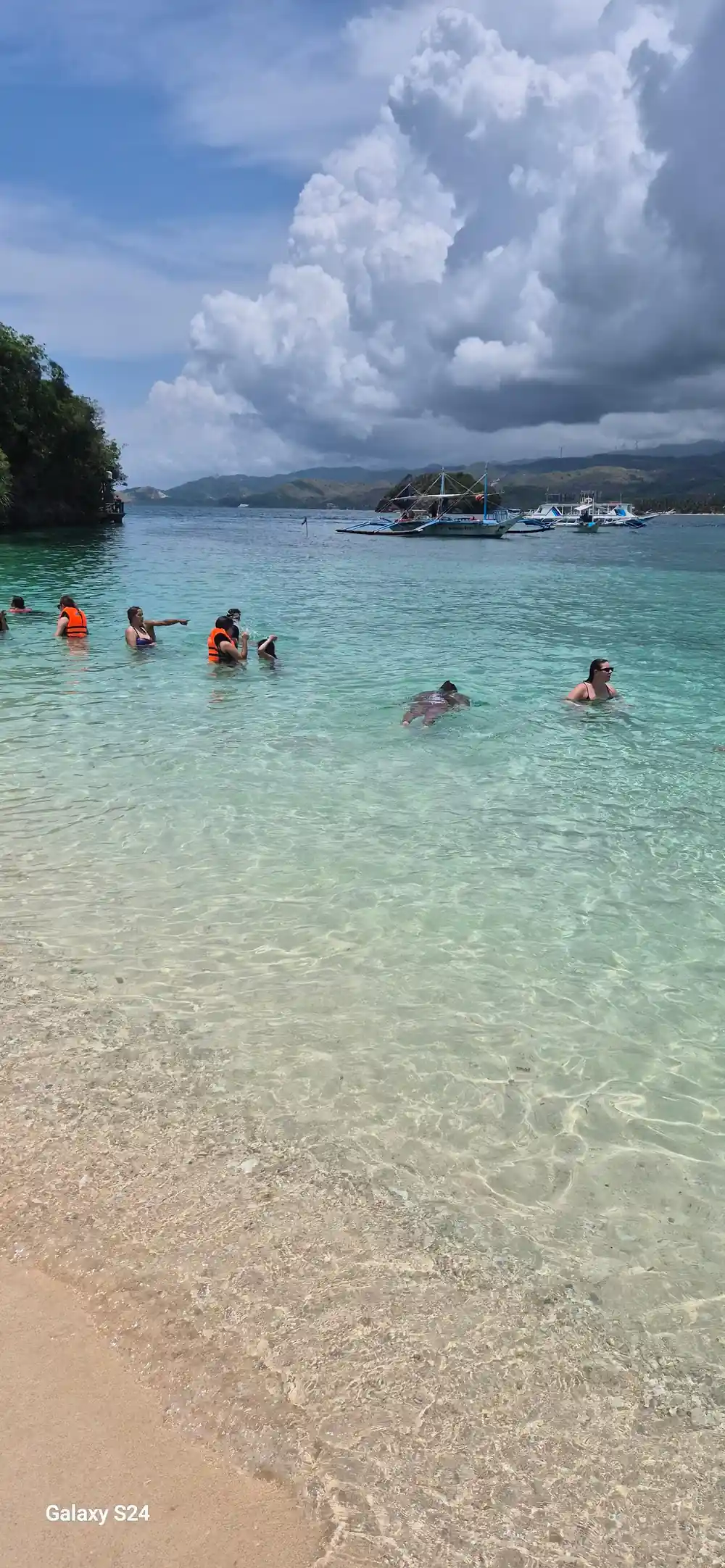
No, and the life vests are the reason. Every guest gets one and wearing it in the water is completely normal on a Philippine island hopping boat rather than a mark of nervousness.
With a vest on, floating face down over a reef requires no swimming ability at all. What it requires is being comfortable with your face in the water and breathing calmly, which most people manage within a couple of minutes.
Guests describe the crew making sure everybody felt safe and nobody was left behind, which at a snorkelling stop is the part that matters. Tell them if you are nervous and somebody stays near you. That reassurance appears often enough in the review record to read as a habit rather than a one-off.
Looking after the reef
Do not stand on coral, do not touch it, and do not take anything. Coral is a living animal that grows slowly and a fin kick that breaks a branch undoes several years.
Reef-safe sunscreen is the other one, and it matters more in shallow tropical water than almost anywhere. Chemical sunscreens bleach coral, and a boat load of snorkellers puts a considerable quantity into a small area.
None of this is onerous in the slightest. Float, look, keep your fins behind you rather than under you, and leave the reef exactly as you found it for the boat arriving after yours.
Book a day with a reef stop
from US$19Reserve now & pay later
Things travellers ask
Is snorkelling gear included?
Should I bring my own?
What can I see?
Are the sea snakes dangerous?
Why is a moray's mouth open?
Do I need to swim well?
Is there a fee?
What is provided
- Snorkelling mask, included
- Life vest for every guest
- Snorkel tube and fins are not included
Facts in brief
- MaskInclusions
- Tube and finsNot included
- Snorkel feeOptional, on the day
- GuidePicks the site